
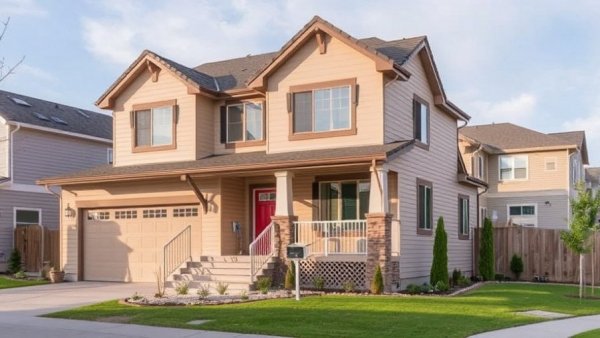
Remodeling Activity Remains Stagnant in Q2 Amid Housing Market Challenges
The latest report from the National Association of Home Builders (NAHB) has revealed that remodeling activity has plateaued in the second quarter, reflecting ongoing struggles within the broader housing market. The NAHB's State Projections of Remodeling (SPR) highlighted that spending remained virtually unchanged, with declines noted in 26 states and nominal increases in 24 others. The overall average growth rate stood at a striking 0.0%, signaling a period of uncertainty and restrained consumer spending. Chief Economist Robert Dietz attributes this stagnation to a combination of escalating construction costs and a lack of consumer confidence.
What’s Driving Stagnation in Remodeling?
Despite the challenges, some states have exhibited resilience. For instance, North Carolina and Illinois were the only large markets to report growth in remodeling spending during this period, while California topped the national spending charts with a substantial market share of 7.9%, translating to $21.4 billion. It’s evident that while the national trend indicates flat results, localized pockets of growth suggest different dynamics at play—especially in smaller states where spending has increased more rapidly. However, as NAHB Chairman Elliott Pike highlights, the aging housing stock amid a 'mortgage rate lock-in' effect will inevitably contribute to a rebound in remodeling activity as homeowners gain access to home equity for funding their projects.
Future Insights on Remodeling Expansion
Looking ahead, the NAHB is maintaining a positive outlook. Pike noted that the remodeling sector holds immense long-term growth potential, driven by several factors such as heightened home equity and a trend of homeowners opting to age in place. This strategic pivot signifies a shift in consumer priorities towards enhancing existing properties rather than seeking new purchases, suggesting a transformation in the real estate landscape. Interestingly, the NAHB Remodeling Market Index (RMI) has endured stability, remaining above the pivotal 60-mark for the past year—a clear indicator of remodeler confidence amidst market fluctuations.
Current Market Dynamics and Trends
The remodeling sector is witnessing significant changes with a mass of new firms entering the market; from 69,000 in 2000 to a robust 128,000 at the start of 2025. This growth could reflect increased entrepreneurial interest driven by market demands and changing consumer behaviors. As remodeling accounts for an increasingly significant share of residential construction, both in terms of firm numbers and total spending, industry stakeholders must remain vigilant to adapt to evolving homeowners’ needs.
The resilience of remodelers and the potential for revival in remodeling spending make it imperative for industry professionals to keep a finger on the pulse of these market dynamics, thus ensuring they are well-positioned to capitalize on future opportunities.




Write A Comment